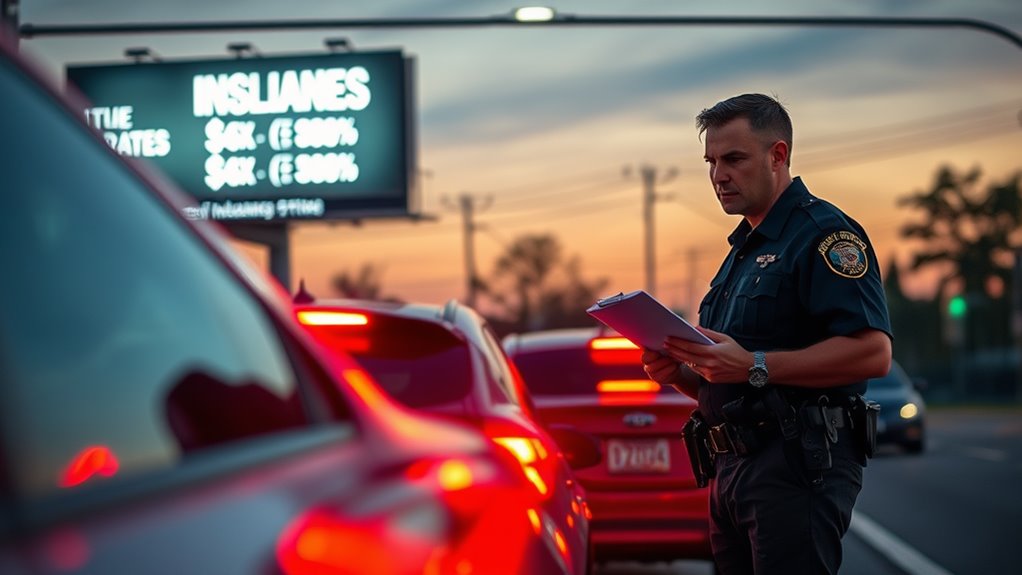
Traffic Violations and Their Effect on Insurance Rates
When you get a traffic violation, it doesn't just affect your driving record; it can also lead to a noticeable increase in your insurance rates. Depending on the severity of the offense, you could see your premiums rise considerably. Understanding how different violations impact your insurance costs is essential for managing your finances. What strategies can you employ to mitigate these increases and maintain a reasonable rate?
When you receive a traffic violation, it's not just a matter of paying a fine; it can greatly affect your insurance rates. Understanding how these violations are classified is essential. Minor infractions, like speeding a few miles over the limit or failing to signal, typically lead to moderate rate increases, often around 10-20%. In contrast, major offenses, such as DUI/DWI or reckless driving, can result in dramatic hikes of 20-50%. Non-moving violations generally won't impact your insurance rates unless they lead to a license suspension.
Traffic violations can significantly impact your insurance rates, with minor infractions causing moderate increases and major offenses resulting in dramatic hikes.
The severity of the violation plays a significant role in determining your rate increase. A clean driving record usually results in lower premiums, so if you've had no issues before, a minor speeding ticket may only lead to a modest rise. However, if you engage in reckless driving, characterized by aggressive behavior and negligence, you're perceived as a higher risk, and your premiums reflect that. Speeding increases accident risk and running red lights can also lead to increases of 10-15%. Multiple violations within a short period compound the effect on your premiums, making it important to be aware of your driving habits. Traffic lawyers can help contest violations and potentially mitigate rate increases.
While the type of violation is essential, other factors also influence how much your rates will go up. For instance, your age and driving experience can affect the severity of the penalty. Younger drivers often experience larger premium hikes after receiving tickets. Additionally, insurance providers have their own policies concerning how they weigh violations. Some may impose stricter penalties than others, so it pays to shop around after receiving a ticket.
Traffic violations typically remain on your driving record for three to five years, but some, like DUI, can linger for up to ten years. Insurers consider your past driving history when calculating premiums, which means the impact of a violation can last even after it's removed from your record. Depending on your state, there may be varying policies regarding duration and point systems, making it imperative to understand your local regulations.
If you find yourself facing a ticket, there are strategies to mitigate its impact. Contesting a ticket may help avoid a premium hike if the violation gets dismissed. Enrolling in defensive driving courses can't only enhance your driving skills but may also provide discounts on your insurance. Additionally, maintaining a clean driving record over time can eventually lead to reduced premiums during renewal.
The legal and financial implications of traffic violations extend beyond the initial fine. Increased insurance premiums often surpass the cost of the ticket itself, creating a long-term financial burden. For repeat offenders, the situation worsens, as you may face even steeper penalties. Being proactive in understanding how violations affect your insurance can help you navigate the complexities of driving regulations and insurance policies, ensuring you make informed decisions moving forward.
Conclusion
In the world of insurance, traffic violations act like a storm cloud hovering over your premiums. A single misstep can lead to increased rates that linger for years, casting a shadow on your finances. By keeping your driving record clean and considering defensive driving courses, you can brighten your insurance outlook. Ultimately, staying vigilant on the road not only guarantees your safety but also protects your wallet from the tempest of rising rates.